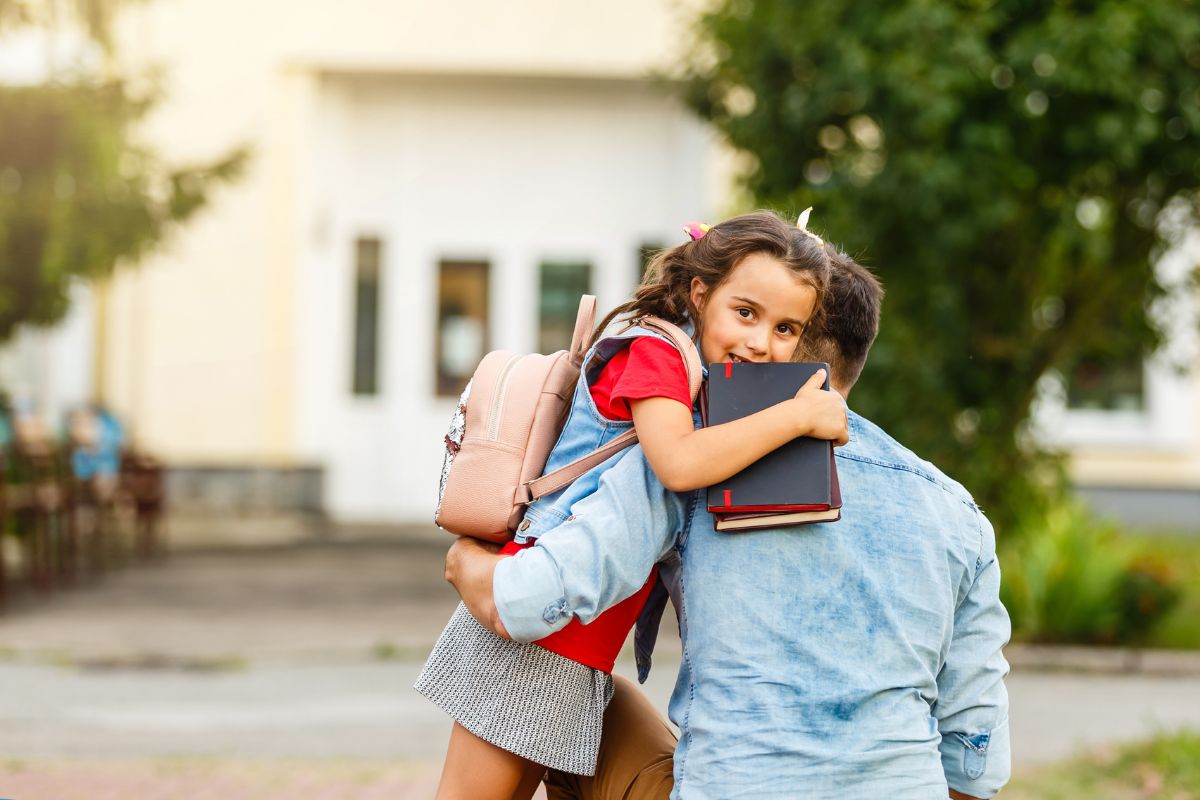
As children return to the classroom, some may face re-entry anxiety. This anxiety reflects an understandable uneasiness about letting go of some of the practices and behaviors that kept us safer during COVID-19. In addition to classroom safety restrictions, which can heighten stress, additional pandemic effects may make this transition more challenging for your child. Younger children who have spent the pandemic in close contact with their parents may experience difficulty separating, while some older children may be carrying the weight of their parents' anxieties, in addition to their own. Going back to old routines may take some work.
Here are some strategies to help reduce students' feelings of uncertainty. Whether it is a little one in kindergarten or a high-school teen, these strategies can help ease their worry.
Model emotion regulation. There's never been a better a time to model emotion regulation and stress management to your children. These quick and simple calming activities for children can be very effective if your child sees you using them as well:
-
Use a drawing of a thermometer and have your child rate their current stress or the intensity of a feeling from 0-10. Next, have them count backward slowly from that number down to zero. When they get to zero, have them rate it again, then count backward from that number. Continue until their stress rating is below a five. That level of intensity is much easier to face!
-
Teach deep breathing strategies such as breathing in through the nose, pausing, and then slowly breathing out through the mouth. Try pretending to blow bubbles as slowly and as big as you can. Many kids love using 5-finger breathing, in which the child spreads the fingers of one hand out like a star and then uses their index finger of the opposite hand to trace their hand. Starting from the base of the thumb, have your child breathe in through the nose as they trace upward to the tip of the thumb, pausing at the tip while holding their breath, and then breathing out slowly as they trace down the other side. Repeat on each finger.
-
Have them rate their feelings after practicing different calming strategies to see what works best for them.
Use stories to relieve stress. Tell the story of what is happening, what they might be feeling, and how you will cope together. For example, you might say, "You're starting 2nd grade in a whole different way, and you feel a bit scared, but you also know who your teacher is, and you have friends in your class. We will get through this together." You can take this strategy to the next level by creating a social story, which is a small book that goes step-by-step through what they can expect – from how drop-off works and washing their hands, to how their classroom might look different.
Create connection and communication. Spending quality time together provides opportunity to communicate about the transition and ask questions about their experiences. Connection time with parents also releases oxytocin, a feel-good hormone that helps reduce stress.
Establish rituals. Rituals provide predictability and security, reduce stress, and are often the things children remember most! Try to incorporate daily rituals like a morning song, an in-bed morning cuddle, a special handshake, or something you say to each other at drop off, pick up, or bedtime.
Play, play, play. Unstructured indoor and outdoor play with parents or caregivers helps lower children's stress levels and process emotions. Physical movement also helps calm their nervous systems.
Don't be unrealistic . If we overly reassure or minimize the risk by saying that everything is completely safe, we can send confusing messages that can make children stressed and leave them without anyone reliable to talk to. Instead of saying "don't worry," try saying "I know this year isn't like usual, but here's what we're doing to keep ourselves safe…"
Focus on what you can control. Encourage your child to get plenty of sleep, eat well, exercise, connect with others, and use helpful thoughts such as "I can do hard things" or "I will be myself and have fun with my friends." These fundamentals are key to helping your child cope and instilling the belief that when faced with challenging situations, we can still choose how we respond.
Be patient. Recognize and acknowledge that adjusting to in-person learning will take longer for some children. Everyone adjusts at their own pace. Expect that during the transition, your child is likely to show stress through challenging behaviors, sleep difficulties, clinginess, or changes in eating habits.
Take care of yourself . Many parents are struggling with the idea of their children returning to the classroom while also navigating their own re-entry anxiety. Practicing the same fundamentals of self-care, such as proper sleep, exercise, and nutrition, in addition to engaging your own support systems, is necessary to manage your stress and wellbeing while modeling for your children to do the same.