Building Relationships With Young Children
Children need help building their self-regulation skills in order to be successful in the classroom, whether they are in preschool, kindergarten, elementary school, or beyond!
They need us, the nurturing adults in their lives, to help them learn how to manage their behaviors, their feelings, and their thinking processes. Sometimes we can teach them these skills directly, and sometimes we can model these skills for them.
Kids learn their school readiness skills from adults – Prepare with SEEDS for kids to learn their skills with you!
Learning Happens in Relationships
For kids, and even for us as adults, learning happens in relationships! So, before you jump right in and teach a new school readiness skill to a child, consider how important it is to first build a nurturing relationship with the child.
But how?
Take a look at this video to learn about how child-led play can help us build the relationship. We adults can practice two key skills that can make a big difference!
Let’s Take a Closer Look
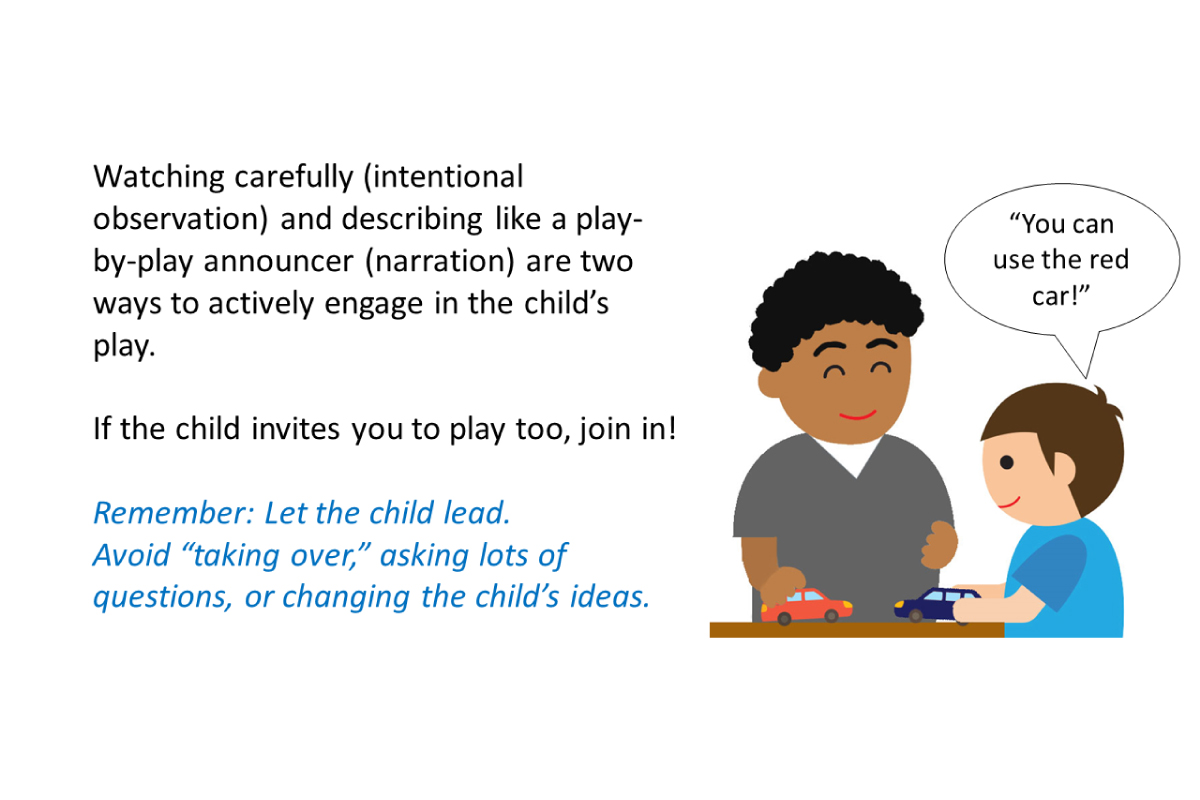
You can use child-led play with all children, and it’s especially helpful for building relationships with children with histories of trauma or other early adversities. Let’s review the steps!
Turn Questions into Narrations
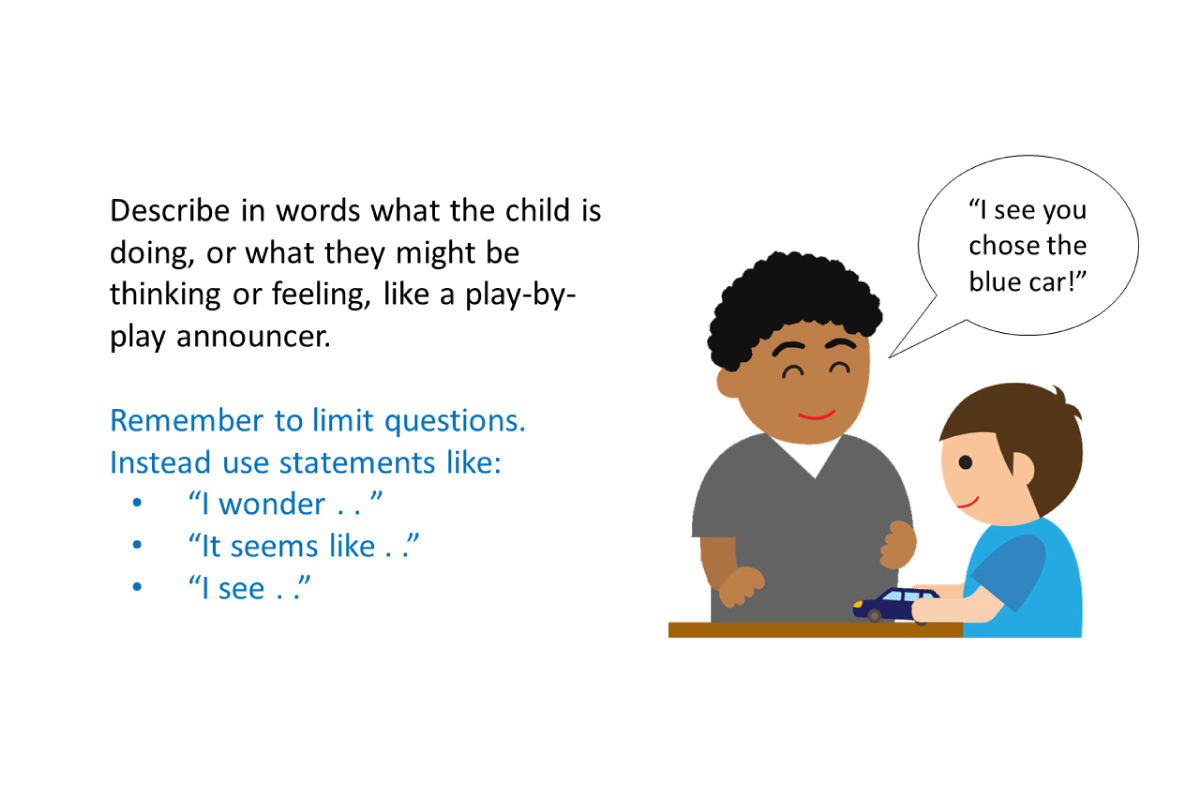
During child-led play, we try to limit questions in order to give the child time and space to lead the play.
You can turn a question into a narration by rephrasing it as an “I wonder,” “I see,” or “It looks like” statement!
“What are you building?" ➡ “I wonder what you’re building.”
“Why did you choose so many colors?" ➡ “I see you’re using many colors.”
“What book are you reading?" ➡ “It looks like you're reading a new book!”
Put this in your Toolbox
Young children rely on nurturing relationships to learn and thrive. Knowing that child-led play interactions can become the building blocks of a strong, nurturing relationship—now that’s a key concept for us to hold in mind. When you are able to have even a few moments with a child to practice child-led play, remember to:
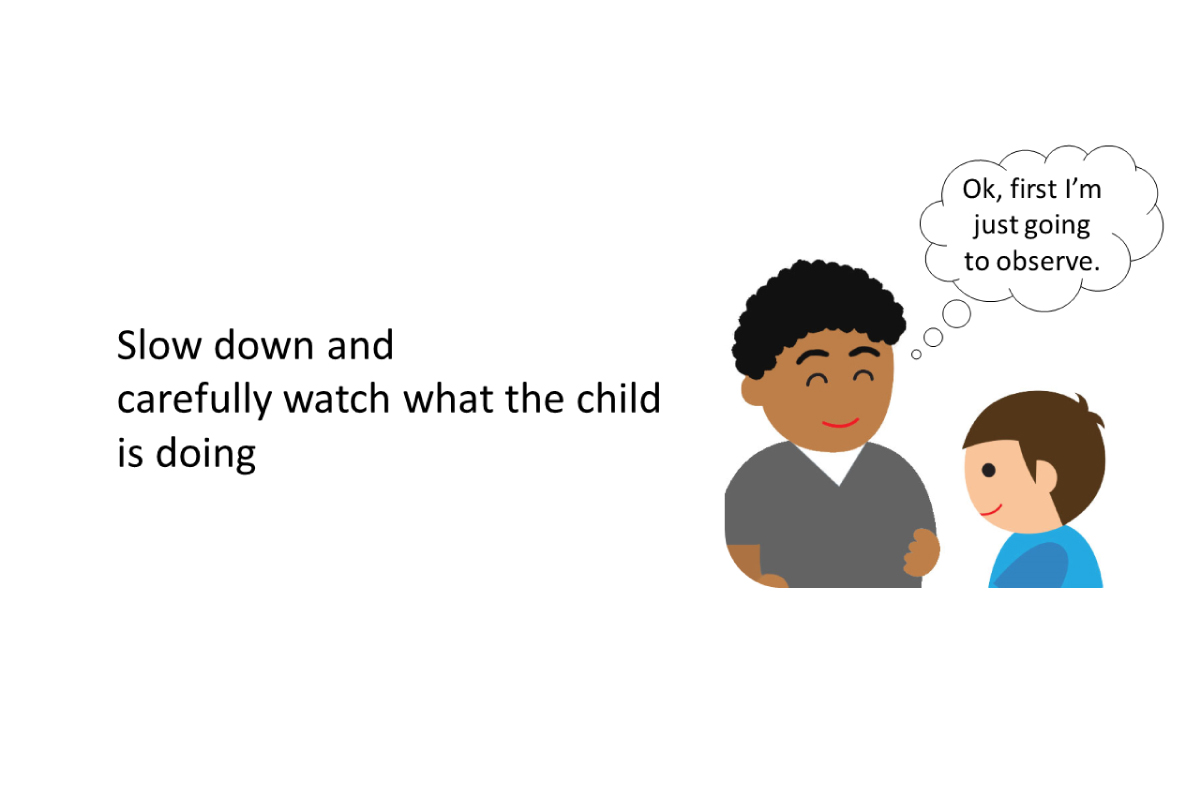
- slow down and use intentional observation, and
- try narrating instead of asking questions.
Remember that children with histories of trauma may not have had the experience of child-led play before. Be patient and consistent with observing and narrating. Most children, including children with histories of trauma, will eventually see these child-led play interactions as predictable and comforting.
Print this SEEDS resource for your classroom or office! Or share it with a parent, caregiver, or colleague who might like the visual reminder!
Do you have another 10 minutes? Check out the next article in this series: Hot and Cool Moments.